Welcome to HentaRobot’s very first game review of the site! It’s only fitting that I start out with the very first game that introduces me into the wonderful world of JRPGs. With the remake coming out soon, let’s talk about what makes the original game fun and memorable.
Released in 1997 for the Playstation by the developer SquareSoft (now known as Square Enix), the story follows the mercenary Cloud Strife that joins the eco-terrorist group AVALANCHE in order to stop the megacorporation Shinra that are continually using the planet’s life essence as an energy source.
The plot itself is pretty straightforward with some nice twists here and there, but what really got my attention at the time was how mysterious the villain, Sephiroth really is. He is a famous Hero with an exceptional strength (and exceptionally long katana) who has turned rogue and is obsessed with his mother. What made this famous Hero turned rogue? What drove him to be a mama-con? How many bottles of shampoo did he use everyday? Combine that with the whole mystery surrounding Shinra and their experiments plus the steampunk-like environment of the game, and you’ll get a weirdly fun plot that is enough to keep you engaged throughout the game.
Putting Sephy aside, the characters themselves are all fun and have great design. Cloud with his trademark spiky hair and sword the same size as him quickly makes him memorable right from the start. Barret has a machine gun as his arm, Tifa is a delicious martial artist that punch her enemies to a bloody pulp, Red XIII satisfy the craving of those who wants a feral animal as a party member, Cid is one of the most badass Cids we got in the FF franchise, we got a ninja, a shapeshifter, and….. well, Cait Sith is a thing. Yeah.
No, really. Who wouldn’t?
Speaking of environment, what makes the world of FF7 stood out is the incorporation of horror elements in the game. There are certain parts of the game that makes you wonder if you are actually playing a horror game disguised as a JRPG instead. For example, the haunted mansion in Nibelheim is full of weird ghosts and monsters. I won’t be surprised if there is even vampires sleeping in the basement or so, because that is how spooky the mansion is. From the underwater passage in Junon to the sewers in Midgar, there is always the feel of suspense as in something is watching you from afar. And don’t get me started on that sunken plane. Even the underwater exploration makes you feel like you’re alone and really small in the scale of the world. While the underwater music is calming, it also gives off a chilling vibe. Wait, did something just pass beside our ship? Nah, must be our imagination.
You don’t want to be stuck here IRL
One of the fun aspect of FF7 is the battle system. The battle uses the traditional turn-based battles, but what you can do depends on what materia you equipped on your party members. Materias have various effects, from magic spells like Fire and Cure, to abilities like Steal and Manipulate, to passive effects like HP Plus and Cover. The Materia system gives you a lot of freedom in customizing your party member’s battle style.
Fancy a Cloud with a classic Knight setup? Give him HP Plus materias plus Cover materia.
Want Cloud to be a Rune Knight ala Celes and Terra? Give him those magic materias plus support materias that improve his magic/mp.
Want an all-rounded party that can do everything? Spread out your magic and summon materias across all three party members.
Veterans of the game will probably tell you that some setups are way better coughenemyskillcough than other setups, but don’t let that hinder you from running your own setups if you just want to have fun. Sometimes you just want to blast your enemies with all kind of magics. Sometimes you just want to enjoy watching those fancy summon animations (over two decades later, and I am still enjoying watching those summons myself). The game itself is easy enough that you don’t have to optimize your setups as long as you understand the fundamentals of how the materia works. Part of what makes the materia system fun is being creative and mix-match to see what kind of combination and setups you can come up with.
During the party’s free time, they can visit the Gold Saucer which is a one-stop centre to all kinds of entertainment. The battle square served as a coliseum to test your strength and gives you some nice rewards in return. The wonder square is filled with all kind of minigames. The chocobo square lets you participate in chocobo racing, or let you be the spectator and bet on other chocobo racers. Suffice to say, the Gold Saucer is a fun place and it will always be open for the party to relieve some stress.
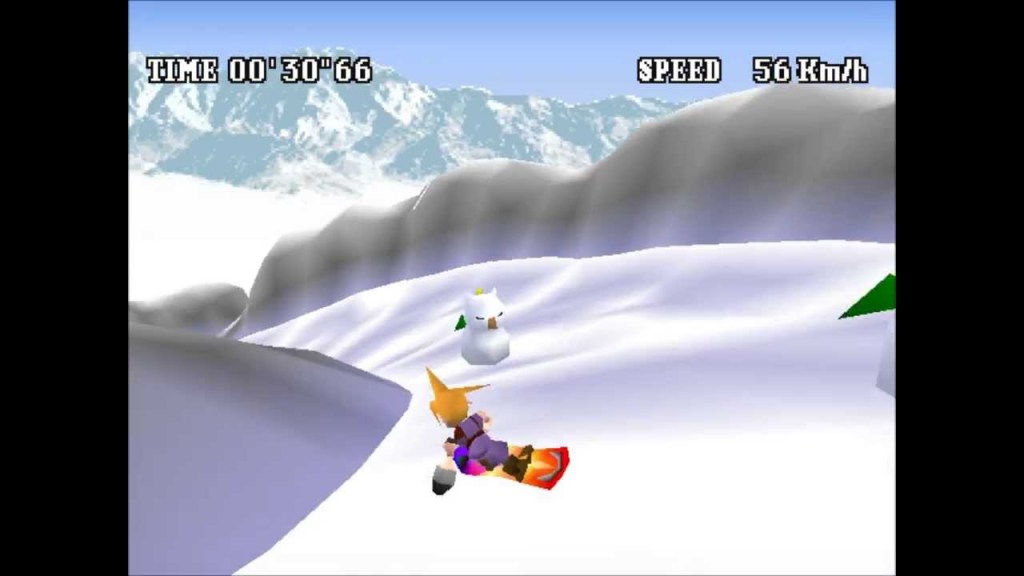
Saving the world can come later. Right now is snowboarding time.
Final Fantasy 7 in my opinion is one of those games that can stay fun years after its release without feeling outdated from a gameplay perspective. The materia system is fun and is still one of my favorite mechanics in a Final Fantasy game, the world felt lively -albeit creepy at times-, the soundtrack is amazing, and the characters themselves are memorable. This game is my first venture into the JRPG genre, and it did a great job in convincing me about the wonders of JRPGs and I will always be grateful for getting to enjoy that experience at the mere age of seven.
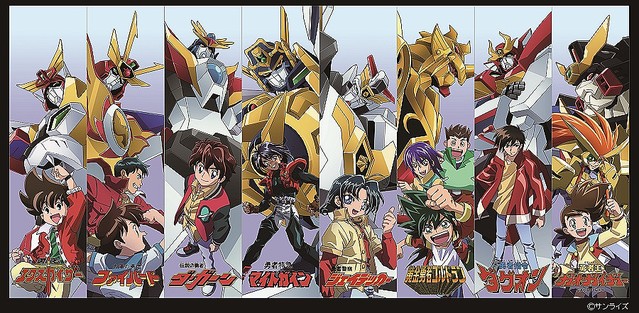
Sunrise Co. Ltd. announced on January 31 that eight titles from the “Brave Series” -including all 48 episodes of “Brave Exkaiser”- will be aired for free for a limited time starting from January 31 2020. This is done to celebrate the “Brave Series” 30th anniversary.
The “Brave Series” consist of the following:
Brave Exkaiser
The Brave Fighter of Sun Fighbird
The Brave Fighter of Legend Da-Garn
The Brave Express Might Gaine
Brave Express J-Decker
The Brave of Gold Goldran
Brave Command Dagwon
The King of Braves Gaogaigar
In addition to Brave Exkaiser’s 48 episodes, the rest of the Brave Series will have their first five episodes plus their opening video be aired for a limited time.
The airing schedule of the official Youtube channel is as follows (note that the time is based on JST):
For all eight series:
Opening video: January 31, 2020 (Fri) 12:00 till May 31, 2020 23:59 Episode 1 to Episode 5: February 3, 2020 (Mon) 20:30 till End time undecided
For Brave Exkaiser:
Episode 1: February 3, 2020 (Mon) 20:00 till End time undecided Episode 2-Episode 5: February 3, 2020 (Mon) 20: 30 till End date undecided (Subsequent five episodes will be added every Monday at 18:00 JST) Episode 6-10: February 10, 2020 (Mon) 18:00 till May 31, 2020 (Sun) 23:59 Episode 11-15: February 17, 2020 (Mon) 18:00 till May 31, 2020 (Sun) 23:59 Episode 16-20: February 24, 2020 (Mon) 18:00 till May 31, 2020 (Sun) 23:59 Episode 21-25: March 2, 2020 (Mon) 18:00 till May 31, 2020 (Sun) 23:59 Episode 26-30: March 9, 2020 (Mon) 18:00 till May 31, 2020 (Sun) 23:59 Episode 31-35: March 16, 2020 (Mon) 18:00 till May 31, 2020 (Sun) 23:59 Episode 36-40: March 23, 2020 (Mon) 18:00 till May 31, 2020 (Sun) 23:59 Episode 41-45: March 30, 2020 (Mon) 18:00 till May 31, 2020 (Sun) 23:59 Episode 46-48: April 6, 2020 (Mon) 18:00 till May 31, 2020 (Sun) 23:59
The Super Robot Wars series is a long running franchise with a dedicated fanbase, both in and outside Japan. Despite the fact that the series is only released in its native Japanese language and never been localized in English, it never stop international fans from playing the games and enjoying it. In fact, fans never have any expectations of seeing a mainline SRW being released in English. This is understandable as there are a lot of licensing issues that needs to be sorted out due to the huge list of mecha series involved in each games. Their spin-off series Original Generations has had a few English releases (two on the Game Boy Advance platform and one on the Playstation 3/4 platform), but those are understandable due to the mechas and characters involved belonging mostly to Banpresto (the studio involved in making the SRW series).
Therefore, it comes as a huge surprise when the announcement of Super Robot Wars in V back in 2016 is followed up by the announcement of the game being released in Asia region with English text! The announcement is made to celebrate the series 25th anniversary, and with the spin-off Original Generations (OG) game Moon Dwellers also coming out in Asia with English text, it is truly a year of celebration for the SRW franchise.
Unfortunately for those who have played SRW Z3 Tengoku on the PS3, SRW V features a cast list where 2/3 of its cast are recycled straight from Z3 Tengoku. Z3 Tengoku was released in 2015 and the game itself is quite long and feels sluggish at times, so having a new game where more than half of its cast being recycled from Z3 within two years can burn some people out.
Fortunately, the remaining series more than made up for it and the buzz certainly manages to overcome the negativity from the recycled aspects. Featuring the debut of the following series:
Mobile Suit Gundam: Hathaway’s Flash
Mobile Suit Crossbone Gundam: Skull Heart
Mobile Suit Crossbone Gundam: Steel Seven
Brave Express Might Gaine
Shin Mazinger ZERO vs Ankoku Daishogun
Space Battleship Yamato 2199
Cross Ange: Rondo of Angel and Dragon
this marks the first time that a battleship-only series makes its debut in an SRW game. This is also the first time that we’re getting another show from the Brave series, with the only other representative so far being Gaogaigar in past games. This game also marks the return of ZZ Gundam which were last seen in SRW Alpha 3 in 2005 (or Advance Portable in 2008 if we’re counting ports and remakes) and Nadesico: Prince of Darkness which were last seen in SRW W in 2007. No, we don’t talk about SRW OE here.
Mechanics-wise, the game introduced the TacP (Tactical Point) system that allows you to purchase a lot of things using TacP. Examples of things you can purchase with TacP includes unique Power Parts from the Factory, upgrading Grades that gives you a choice of benefits in battles, or buying skill parts for your pilots. These options are available in some games in the past, but they are mostly separated by different currencies. The introduction of TacP in V is made so that they all share the same currency for convenience’s sake.
The biggest improvement coming from the TacP introduction is the ease of customizing your pilots. In the past, purchasing skills and extra stats for your pilots require the currency called PP (Pilot Point). PP is tied to each pilot and are rewarded every time they shot down an enemy. The PP system can be troublesome for Support-type pilots or healers since they mostly spend their time healing instead of destroying enemies. Also, pilots who joined early have the advantage of raking up the kills (thus getting more PP) which means they can be really strong by endgame with enough PP collected. Meanwhile, pilots who joined late have the disadvantage of having low PP to customize and cover up any immediate weak spots. The TacP system removes the limitation of having points tied to individual pilots, which means any pilots can buy skills and increase their stats anytime they want during intermission provided you have the TacP to purchase said skills. This means that any snipers or battleship pilots can straight away purchase useful skills like Hit&Away without having to grind for kills first.
Another improvement that the game made is the ability to cast Spirits anytime you want, which includes during enemy turns. In past games, Spirits can only be used before the player units use specific actions during the player phase. The improvement means that you no longer need to gamble on whether to put up your defensive Spirits or not before your turn ends, which may or may not be a waste if the enemies decide to target a different unit instead. This improvement has significantly reduce the difficulty of the game, with V often being regarded as one of the easiest game in the franchise.
The main characters (MC) of this game are Soji Murakumo and Chitose Kisaragi. Whoever you pick will pilot the VangRay, a prototype mobile weapon with anti-alien warfare weaponry. The Vangray is a good main unit, with the mech itself having high armor while also having a decent mobility stat. The main appeal of VangRay is that it comes with the Repair command, allowing it to heal a nearby ally while also giving itself self HP Regen every turn. It also comes with a Shield, which further helps with its tankiness. Combined with the attacks having a decent range, the VangRay truly feels like a “multipurpose jack-of-all-trades” kind of mech.
The main protagonists Soji and Chitose
Soji is an interesting character with a lot of potential to be a really great and memorable hero. Right from the start, he is already being established as an ace pilot and a war veteran. He participate in a mission against the Gamilas Army, became the sole survivor of his squadron and was left traumatized by the incident. However, it also made him appreciate his life and makes him want to fully enjoy it as long as he could. Unfortunately, the story seems to put a heavy focus on the Yamato crew to the point where it feels like the developers forgot about our main characters halfway through the game. In fact, it feels like the hero of this game is actually the Yamato crew while the story is told from Soji or Chitose’s point of view. I can’t comment on Chitose since I haven’t played her route yet, but Soji has such a great design, cool theme song and an interesting backstory that he could have been a really great MC that can stand on par with the likes of the Z-series MCs, Arnie from UX or Axel and Lamia from Advance.
The battleship Yamato is a really strong unit. In fact, it’s so overpowered that soloing a stage with the Yamato is easily achievable. The unit comes with a barrier that negates any damage below 2500 damage threshold, which means most enemy mobs can’t even scratch the Yamato. The barrier cost 10 EN per attack, but that will never be an issue for the Yamato as the unit comes with EN Regen (M). With the Yamato’s high EN even at an unupgraded phase, it can easily recover 70+ EN every turn. On top of that, the unit has attacks that covers a lot of range with a balanced split between ammo and EN usage. It also comes with three sub-pilots to support the main pilot Okita. Throw the Yamato in the middle of the enemy fleet and watch them die one by one while the Yamato comes out mostly unharmed.
The actual main character of the game
The second Brave series to join the world of SRW is Brave Express Might Gaine. The Might Gaine as a unit is your standard fare Super Robot with high armor, good self-sustenance Spirits and a strong finisher. However, the unit itself is pretty bad at handling multiple units at once. Its low movement, coupled with its low range Post-movement Dorinken attack and its inability to fly often means that the Might Gaine will have a hard time reaching the enemy mobs. It’s a good unit early-game, but it falls off in mid-game onwards.
Might Gaine in action
The upgraded form of Might Gaine though is a completely different beast. Packing a lot of attacks that have good range and firepower plus having the ability to fly, the Great Might Gaine is a really powerful unit that really fit its ‘Brave’ motive. While the unit suffers from its attacks consuming a large amount of energy, its main flaw can easily be fixed by giving energy-related power parts to the unit. In fact, purchasing the Hyper Generator (restore EN to full every turn) and giving it to Great Might Gaine will pretty much turn it into a one-man army. Give it the Barrier Field power parts and it will turn into an unkillable Ultimate Super Robot!
The next series that I’ll be covering is Cross Ange. All the main girls in the anime are playable in the game, though their units mostly function the same gameplay-wise. Being the main character of her show, Ange is the stand-out pilot from the series and consistently stays strong throughout the game. Her unit, the Vilkiss has high movement, high mobility and good range of attacks. A powered-up Vilkiss comes with HP Regen, EN Regen and a special evasive ability called Ariel Mode. To further emphasize on the unit’s evasiveness, Ange comes with an innate Potential level 8 (increase the pilot’s stats the lower their unit’s HP is) and an Ace Bonus that further increase the unit’s final evasion rate.
The rest of the Para-Mail units from Cross Ange are pretty unremarkable. Ersha has a cheap Trust spirit, but Tusk will outperform her in the support role as soon as he’s available. Hilda is a good offensive pilot, though her initial mech is pretty underwhelming which means she will have to wait for her upgraded mech before she can really shine. Salad Salako is a great long-range attacker and a good Support Attack candidate. Her mecha’s Custom Bonus reduce the energy cost of her Convergence Space-Time Cannon to only 10 EN, effectively making her a really good unit to deal with enemy mobs.
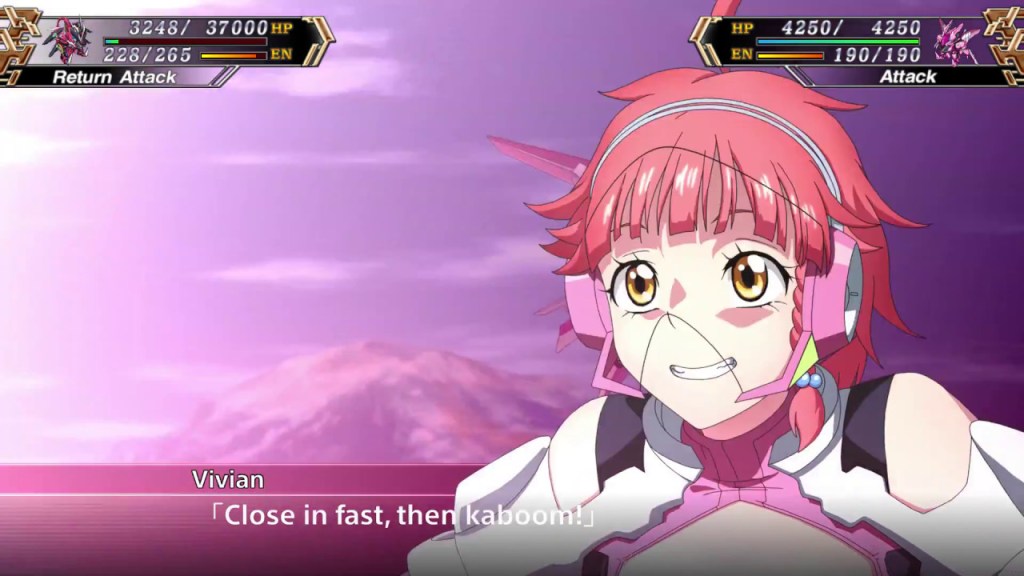
Vivian deserves a special mention due to how useful she is as a support. The Daunt spirit command can reduce an enemy’s Morale by 10. This spirit command is useful if you want to disable an enemy’s defensive abilities or prevent them from using their strong attack, or worse, their MAP attack. Normally Daunt can be expensive to cast on top of only a select few pilots having access to it. Vivian’s Daunt is cheap, and with some investment and power parts that boost or recover her SP she can spam the Daunt command over and over. She can effectively turn any bosses into a joke due to her Daunt spam, preventing them from doing anything remotely dangerous. On top of that her Ace Bonus gives us a fixed power part after every stage completion, allowing us to sell said power part for TacP. Her mech, the Razor also comes with three power part slots (four from the full upgrade bonus) giving us a lot of freedom in further specializing her role. Want to use her offensively? Give her a Cartridge and some damage-boosting power parts. Want her to stay in backline? Give her Rescue Unit so she can heal others and a Barrier Field for self-defense. Want to be a sadist? Give her all the SP recovery parts and let her spam Daunt for days.
The worst nightmare of every enemy bosses
The Xi Gundam from Hathaway’s Flash is a good long-range unit. However, the mech is wasted on its average main pilot Hathaway. This is understandable because it’s Hathaway we’re talking about. Funnily enough, the Xi Gundam have more synergy with Kincaid from the Crossbone Gundam series. Kincaid’s innate Hit&Away, high Newtype and Potential level plus access to Snipe spirit command makes him a really good pilot for the Xi Gundam. Later on with the acquisition of Crossbone Gundam X-1 Full Cloth, Kincaid will have the choice of using the Xi for long-range or X-1 Full Cloth for melee combat. Alternatively Tobia can pilot the X-1 while Kincaid remains in the Xi. Who uses Hathaway, anyway?
Mazinger Zero is a monster. That is all you need to know.
Despite the easy difficulty, the game is still fun as it focus on the crossover aspect of the various series involved. For example we get to see the Seed Destiny cast be a mentor figure to the Cross Ange cast, seeing Banagher interact with the likes of Amuro and Camille, the Federation bad guys forming the elite G-Hound force, and seeing our female pilots roasting on Embryo.
Such an intense and epic showdown
One issue that I have with this game is the lack of potential combination attacks here. The Para-Mail squadron are lacking any sort of combo attacks despite all members being playable in the game. Salia and Hilda should have had access to their formation attack with their respective squads, while Ange and Salamence Salako should have had access to their Double Convergence Space-Time Cannon combo attack. We have the Ple twins from ZZ Gundam and Marida from Unicorn Gundam in the same game, and it would have been fun if we can get a Triple Funnel combo attack from these girls. We have Shin-Getter 1, Mazinger ZERO and the debut of Mazin Emperor G, and yet we are denied from a potential Final Dynamic Special.
For a game that celebrates the franchise’s 25th anniversary, SRW V is a decently fun game if you can look past its easy difficulty. It’s nowhere near as great as some past games, but the introduction of the TacP system makes it really convenient for you to just play around with your favorite pilots/units right off the bat. For English speakers, SRW V marks the moment where a mainline SRW is finally localized in English. For those interested in the franchise but never had the chance to try it out, SRW V is a good entry for you to start with.
Chrono Cross has arguably one of the most memorable opening ever made for a videogame. The quote above captures it really well. What was the start of all this? How did Serge’s peaceful life took a sharp turn? The visual of dragons roaming the sky in the opening intro gives off the feeling of a dreadful journey waiting for the hero, while the accompanying music, Time’s Scar is beautifully composed to give off a sense of sorrow throughout said journey.
The scene where Kid stands at the beach just staring at the ocean before turning towards us was such a beautifully made moment that perfectly captures the brief moment of calm before the storm, and it still gives me chills years after the game’s release. In fact, words themselves may not do justice to how amazing the opening is. Feel free to check it out yourself right here if you are interested.
One of the aspect of Chrono Cross that I liked is the amount of playable characters in the game. There are a total of 44 playable characters that you can recruit in your team, each with their own charm and quirkiness and comes with their own set of Techs unique to them. Most of them share a similar play-style to one another, be it as a physical attacker or a magic user. However, their aesthetic and choice of weapons can be a refreshing change of pace in the long run if you don’t feel like sticking to the same few units especially in multiple playthroughs.
The characters themselves vary a lot, from Nikki the rock-star to Greco the wrestler to Orlha the bartender to a dog named Poshul. You want a baby dragon in your party? Check. Want a cyborg? Check. Want a pirate? Check. Want a mushroom? Check. And if you think a playable mushroom is weird, wait till you see a walking turnip.
You can even recruit a chef in this game
Unfortunately, you can’t recruit them all on your initial playthrough. The story offers branching paths throughout the game and the choices you made will affect who will join your party. For example, when trying to break through the Viper Manor you will be given three different methods to choose from. Which methods you choose will determine who will join your party out of the three choices – the traveling magician Guile, the rock-star Nikki or the self-proclaimed hero Pierre. Fortunately, the game has a New Game+ feature that allows you to carry over your recruited characters to subsequent playthroughs. This allows you to have a ‘complete’ save file with all 45 characters (including Serge) for you to play around with once you completed the game.
Many of these characters have a role to play in the story, which helps in fleshing out their character despite the massive roster of the game. Some of them don’t really have a major significance in the overall plot outside of being a random tag-along, and I have seen complaints regarding how it’s only an excuse for the developers to make a bloated roster. Personally I disagree with these views, because in my opinion the randomness of having someone join you for silly or selfish reasons is what makes the roster fun in the first place. Not everyone need a grand reason to join Serge under the pretext of saving the world. Some of them simply join Serge to repay his kindness for helping them, even if the matter seems small at the time. Some of them don’t even look convincing as a hero or a savior of the world (I’m looking at you, Pierre), but it matters not because they still willingly join Serge on his adventure regardless of their status and background.
Poshul joins you simply because you give her a bone
Regardless of their plot importance, each of the characters have their own sidequests that not only flesh out their characters a little bit, but also unlocks their final and strongest Techs. On top of that, certain character combination in your party allows them to perform special Tech combos known as Double Techs or Triple Techs. With their detailed character model and their own unique attack animations, it’s no wonder that the characters are one of my favorite aspect of the game as mentioned earlier.
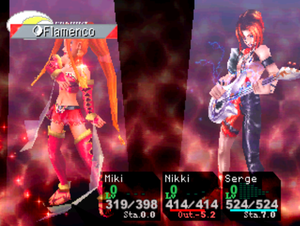
Nikki and Miki can perform the Double Tech “Flamenco”
Earlier I mentioned about how the game occasionally have branching paths (that can lead to different character recruitment). On top of the branching paths, the game also incorporates the ‘alternate dimension’ theme into exploration really well. Sometimes, performing certain actions in the Home dimension can alter the events of the Alternate dimension and vice-versa. Going back and forth between the two dimensions to find hints or see if anything has changed can feel rewarding at times, though it can feel really frustrating when you’re running back and forth and still couldn’t find the hints needed to progress the plot.
Another aspect of Chrono Cross that made the game really enjoyable is the New Game+ aspect. New Game+ allows you to start a new playthrough while retaining you character levels, equipment and Techs learned among other things. It also carry over your recruited characters from the previous playthroughs once you reached a certain point in the game. Additionally, it also adds new alternate endings for us to discover. However, the biggest (and most convenient) addition that the New Game+ function brings is the ability to fight the final boss anytime you want. This is really convenient if you want to recruit other characters or pick a different story branch quickly without having to go through the entire game again to start a new playthrough.
Lastly, what is a great game without great music accompanying it? While the plot and the characters often received mixed reviews (mostly from hardcore Trigger fanbase), one aspect of Chrono Cross that is universally praised is the OST. The OST brings out the vibrant feel that complements the liveliness of the world of Chrono Cross. For example, the Alternate world map theme gives off the feeling of sorrow and loneliness befitting of the events unfolding when Serge first arrives there. The Arni village theme gives off a homely feel, the kind where you would imagine being a kid and waking up and you would run off to school with your friends with no worries of any danger whatsoever. The boss battle theme gives off a sense of urgency, and it fits in with Cross’s battle system. Should you go in with all your normal attack combos? Or should you save it for Techs or Elements (magic)? Despite the battle being turn-based, the boss battle theme will definitely pump up your adrenaline while the bosses themselves provide you with decent challenges. One of the most memorable moments in Chrono Cross is accompanied by an equally memorable song and the entire Marbule event is simply enjoyable from start to finish. Lastly we have the ending song, Radical Dreamers performed by Noriko Mitose (who is also famous for her songs in the Ar Tonelico series years later).
While Chrono Cross may not be the Chrono Trigger sequel that some people have hoped for, it is still a really enjoyable game that can stand on its own. In fact, it remains fun even in this day and age without the gameplay or graphics suffering from poor aging. With its colorful cast and great soundtrack, Chrono Cross really is a timeless classic.
Greetings, everyone! For today’s review, I shall talk about one of my favorite strategy RPG series of all time. The Super Robot Wars series (or SRW for short) is a series that features crossover from various mecha-based works from various franchises, be it from an anime, manga, light novel or even from other games. From Mazinger to Gundams to Macross to Evangelion to works such as Dunbine, Zambot 3 or even Brain Powerd, the series is really popular in Japan and has had a long list of games produced across various platforms throughout the series history.
SRW Alpha Gaiden is my first venture into the series, and it quickly left a big impact on me. Featuring the debut of:
Turn A Gundam
After War Gundam X
Combat Mecha Xabungle
Galaxy Cyclone Braiger
the game was released in 2001 for the Playstation and it is a side story that is set after the events of SRW Alpha. Despite not knowing anything about the series nor the plot, the demo reel showcase from my local game store is enough to attract my attention towards the game. With only some small knowledge of Gundams, Xabungle, Macross and Reideen thanks to their model kits, I braved on towards the game despite my absolute zero knowledge of Japanese language at the time.
Starting the game, I was quickly introduced to the Getter team from the Getter Robo series. Their catchy theme plus Ryouma’s (the main pilot of Getter Robo) hot-blooded yell quickly capture my attention and I knew I am in for a good ride. For a person that have zero knowledge of most of the series involved in the game, I absolutely enjoyed discovering all these new units and pilots and getting to hear their themes, seeing their attacks and just trying to figure out who belong to which series.
Ryouma’s hot-blooded yell can make dinosaurs go extinct
My lack of Japanese knowledge back then has given me a lot of misunderstanding when it comes to the series involved. For example, I thought the Mazinger series are a baseball-themed mechas. On stage 2, I thought Ple in the Qubeley is a princess and that the ZZ Gundam, Sandrock Custom and Daitarn 3 are her royal bodyguards. I thought the Grungust Nishiki is a breakdancing mecha…. Viletta and Alan looks like they are gonna backstab me anytime, I thought Voltes V is a duck, and I definitely thought Kamille is a tomboyish-girl. It wasn’t until a few years later that I was finally convinced that Kamille is, in fact, a boy.
TFW Kamille is a boy
…..Those were fun times, yeah. Moving on to the game itself, the game features a standard turn-based, grid-style strategy where you moved your units and reach the objective of the stage (mostly by destroying enemy units). Alpha Gaiden is often lauded as one of the harder SRW games if you’re playing in hard mode, but it is still doable as long as you utilize the pilot Spirits accordingly. As a newcomer, I played that game without using the Spirits command due to not knowing what they do. With just weapon and stat upgrades to rely on, I was able to go all the way to the late 30s stages before meeting a major roadblock in the form of Turn X in one of the route splits. At that point, accuracy is a major issue because you’ll be having a really hard time hitting the boss while the boss can destroy your non-tanky units within 1-2 hits. Knowing what the Spirits do and utilizing them properly helps reduce the overall difficulty of the game, though you still have to deal with high HP enemy mobs in late-game. This is particularly annoying when you have enemies Support-Defending each other, or worst, Support-Defending a dangerous boss that you need to take out quickly.
One of the elements that are present in many SRW games are called the “SR Point”. The SR Points are rewarded when you achieved given conditions in a stage, such as clearing a stage within a certain amount of turns or defeating a boss before it runs away. These SR Points will affect the difficulty of the game, such as having more enemy reinforcements or enemies having higher stats and HP. Prior to the next stage, the game will check your SR Points total and will determine which difficulty you’re in, which are usually divided into Easy, Normal and Hard. An interesting to note about Alpha Gaiden is that certain stages will play out differently depending on which difficulty mode you are in. This keeps subsequent playthroughs feeling somewhat fresh since you’ll never know what kind of scenarios will play out on different difficulty modes. Even the final battles will play out differently depending on your difficulty mode.
Speaking of difficulty, Alpha Gaiden is infamous for its major difficulty curve that it throws at you in stage 9. Normally around that stage you’ll see bosses around 12k-15k HP range on average, but here in Alpha Gaiden you’ll be forced to fight a superboss with 35k HP that has a barrier, a MAP attack and a long-range strong attack. It also comes with HP regen, because why not, right? Needless to say, for someone that does not know about Spirits command at the time, I lost over half of my roster just to take down the superboss. Daitarn 3 and Reideen were my MVPs, while the smaller units can do nothing against the superboss. The Valkyries? Dead weight. Hyaku Shiki? Absolute dead weight.
Trauma-inducing stage 9 for newcomers
One of the things that made Alpha Gaiden stood out are the pilot battle sprites. In this game the pilots are all wearing their helmet in their battle sprite, whereas in other games they are usually helmet-less. Personally I enjoy the aesthetic of seeing the pilots in their full suit as I find that it makes them stand out more than usual, so it’s a bit saddening to see that Alpha Gaiden is the last game to feature that helmet style in the pilot’s battle sprite.
Alpha Gaiden (and its predecessor Alpha) also have a feature that allow combiner units to separate into their respective smaller forms. For example, the unit Dancouga can separate into four smaller units – Eagle Fighter, Land Cougar, Land Liger and Big Moth – with each smaller mechs being piloted by their respective pilots. While smaller separate units are generally considered weak (the Dancouga units being an exception), having the option to play around with them is always a good thing and can be considered a fun challenge. The feature sadly only last for two games, as we are no longer able to play with the small jets past Alpha Gaiden.
The Big Moth is one of the four units that combine into Dancouga
Plot-wise, the game did a good job at putting the focus on debuting series. Turn A, Gundam X and Xabungle casts got a lot of love, while the Braiger cast get to show how cool they are. Some of the returning series from Alpha got their spotlight on some stages, while others mostly play a supporting role allowing the debuting series to really shine.
If you are a fan of mechas or you want to listen to good soundtracks in general, don’t be afraid to try out the Super Robot Wars franchise. Alpha Gaiden is a good entry point that does a good job in highlighting the series involved while providing a nice challenge for those that just wants to tackle a strategy-RPG. As a side note, Alpha Gaiden is never translated outside its native Japanese language. However, there is an English fan-translation patch released courtesy of Aeon Genesis group. If you have even the slightest interest in trying out the game, be sure to grab the patch to save yourself a lot of hassle in navigating the menus. Who knows, you might fall in love with the franchise like I do years ago.
Greetings, everyone! My name is HentaRobot and I’ll be talking about all things related to gaming and JRPGs and maybe someother topics too.
I have been playing videogames since I was a little kid. From the SNES to the GameBoy to the Playstation era, I have not only play games but also are very lucky to have watch the industry grow and evolves to where we are at right now. I would like to thank my brother for corrupting introducing me to the world of videogames!
This blog will mostly serve as a platform for me to talk about the games that I have played. They will mostly be about JRPGs, as that is the genre that I fell in love with at the mere age of 7 years old. I am also a massive fan of the Super Robot Wars series, so I’ll probably talk about that series too if I have the time.
As a side note, I would like to point out that everyone have different taste and views. Certain elements that I enjoy may have not be to your liking. Likewise there might have been elements of a game that you enjoy, that I am not particularly fond of. Reviews are meant to give you an idea of what the game can offer you, but that does not mean you should take whatever the reviewers said at face value.
Lastly, thanks for checking out the site and I hope you have a wonderful day!









 HentaRobot's Game Reviews